Eat Play Give
Eat Play Give
Eat Play Give is an on-request kids camp focused on healthy eating, playing games and giving back to the world.
Getting Kids Back To Their True Nature
Getting Kids Back To Their True Nature
Getting Kids Back To Their True Nature
Getting Kids Back To Their True Nature

Eat
"Let food be thy medicine and medicine be thy food" -Hippocrates
Mini Alchemist:
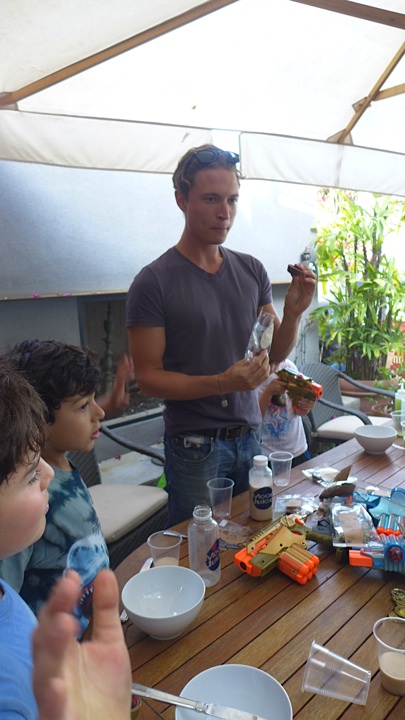
Kids get to experiment with organic cold pressed fruit and vegetable juice.
We have competitions such as who can put the most greens in their juice and still make it taste good.
Snack Pack:
Kids get to sample a wide range of raw organic vegan snacks and goodies, then rate which ones they liked the best.
Play
“Play is the highest form of research.” -Albert Einstein
What we play depends on the environment.
Laser tag, painting, improv acting, and music are all great options, plus any new games we come up with together
Give
"We make a living by what we get, but we make a life by what we give." -Winston Churchill
Each day 10% of the profits (20% if matched) are donated to one of the projects at the Creative Visions Foundation.
The project sponsored each day is chosen by the kids, followed up by a discussion about what they would like to see change in the world and how they can help make that happen.
$60 a kid
(Includes snacks, cold pressed juices and all the laser tag they want)
About
About
About
About

My name is Elijah Allan-Blitz.
Over my 8 years of experience working with kids ages 4 to 16, I've observed the secret to forming healthy habits is making them cool.
ELIJAH@EATPLAYGIVE.ORG
Testimonials
Testimonials
Testimonials
Testimonials
"Elijah Allan-Blitz is a gifted teacher, a talented artist, an inspiring role model and a creative magician with kids of all ages. I have worked with many amazing educators in my twenty years of teaching, but Elijah has a very special blend of talents, empathy and insight that cannot be taught in graduate school. Simply put, Elijah is undoubtedly the best hire I have made in my six years of Head of School. I am supremely confident in Elijah's teaching ability and his dedication to improving the lives of students in any situation or circumstance. Hire him and he may be your best personnel move you have ever made!"
Brian McWilliams
Headmaster of Santa Barbara Middle School
"Elijah was responsible for running the Parks and Recreation after school program at Open Alternative School. In this capacity he designed curriculum and supervised 3rd through 8th grade students. He brought his gift of connecting to students and understanding their lives to this position. Elijah used games and play to facilitate students understanding of both themselves and others. Through physical and dramatic play students were able to challenge themselves and deepen their self awareness. Elijah skillfully facilitated students through conflict resolution and collaborative problem solving. As a true testament to his strengths the students effortlessly gained the skills necessary for being caring individuals."
Alejandra Tashma
Principle of Open Alternative School